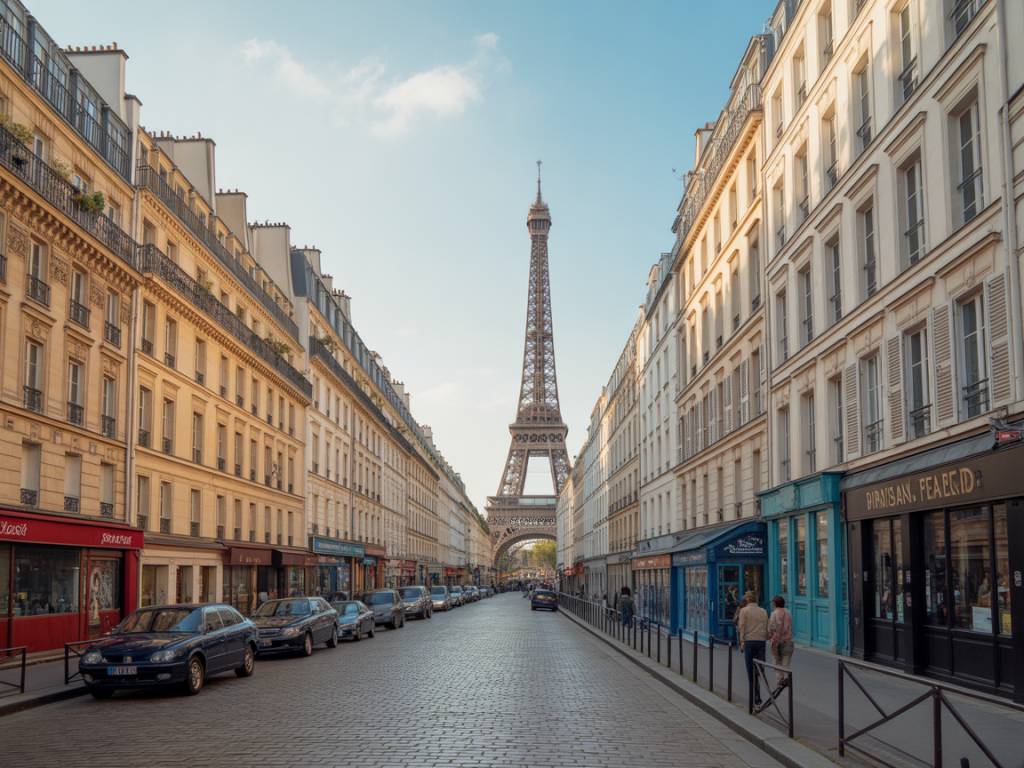
Paris and Bollywood: A Love Story on Screen
Over the last two decades, Paris has quietly become one of Bollywood’s favourite international backdrops. From romantic song sequences along the Seine to dramatic confrontations under the Eiffel Tower, Indian filmmakers have embraced the French capital as a symbol of love, aspiration and cosmopolitan glamour. For Bollywood fans visiting France, exploring these filming locations in Paris offers a fresh and playful way to experience the city, beyond the classic tourist circuits.
This guide focuses on key Paris Bollywood filming locations, iconic scenes shot in the city and lesser-known Indo-French connections that link Hindi cinema to the French capital. It is designed for travellers who want to combine classic Paris sightseeing with a themed Bollywood tour.
Iconic Bollywood Movies Filmed in Paris
Several major Hindi films have used Paris either as a primary location or as a highlight for memorable songs and scenes. Knowing which movie shot where is the first step toward planning your own Bollywood-inspired itinerary.
Some of the best-known Indian films featuring Paris include:
“An Evening in Paris” (1967) – One of the earliest Hindi films to showcase Paris extensively, turning the city itself into a co-star. The film established Paris as an aspirational, dream-like destination for Indian audiences.
“Jhoom Barabar Jhoom” (2007) – While much of the story unfolds in London, Paris appears in key romantic moments and musical interludes, reinforcing the idea of the city as a place of chance encounters and complicated love stories.
“Queen” (2014) – Kangana Ranaut’s character passes through Paris at a critical moment in her journey of self-discovery. Although Amsterdam is her main European stop, the Paris section sets the tone for solo female travel in an unfamiliar yet inviting city.
“Befikre” (2016) – Perhaps the most Paris-centric Hindi film of recent years. Shot almost entirely in the French capital, it uses both postcard-perfect monuments and everyday neighbourhoods, turning contemporary Paris into a playground for impulsive romance.
“Ae Dil Hai Mushkil” (2016) – Paris appears briefly, but memorably, as part of a cosmopolitan journey through Europe, reinforcing its status as a natural stop in a modern, global love story.
Even if you have not seen all of these films, their use of Parisian streets, bridges and cafés has contributed to the city’s strong presence in the collective imagination of Bollywood fans.
Following Bollywood Footsteps around the Eiffel Tower
No Bollywood pilgrimage to Paris is complete without a stop at the Eiffel Tower. For decades, Indian filmmakers have used the tower as shorthand for overseas romance, wealth and fantasy. Many sequences do not specify a particular movie location, but feature panoramic shots, walks along the Champ de Mars or views from the nearby bridges.
For fans wishing to recreate Bollywood-style moments:
Champ de Mars – This vast lawn in front of the Eiffel Tower is a common setting for picnic scenes, dance steps and wide establishing shots. Visit early in the morning for fewer crowds and a more cinematic atmosphere.
Trocadéro Square – On the opposite side of the Seine, Trocadéro offers one of the most recognisable viewpoints of the tower. Many promotional photos and film stills are taken here, including material used in marketing Indian films abroad.
Seine River Cruises – A number of movies cut from close-ups on a boat to long shots of the Eiffel Tower at night. While few specific Hindi films are shot entirely on the cruise boats, the aesthetic is instantly familiar from Bollywood’s love for illuminated monuments and floating romance.
For an authentic cinematic experience, visit near sunset, when the sky softens and the hourly sparkle of the tower after dark offers a ready-made backdrop reminiscent of film climaxes and song endings.
The Seine, Bridges and Riverside Romance
In Hindi cinema, riverside walks and heartfelt conversations often play a central role in building chemistry between characters. Paris, with its photogenic quays and bridges, fits this narrative perfectly. Even if a specific movie title does not come to mind, the visual language is unmistakable: couples leaning on stone parapets, musicians playing in the distance, boats gliding below.
Key spots along the Seine to explore through a Bollywood lens include:
Pont des Arts – Once famous for its love locks, this pedestrian bridge has been a favourite with international filmmakers. While not tied to one iconic Bollywood film, it represents the archetype of the romantic Parisian bridge that Hindi cinema loves to reference.
Île de la Cité and Île Saint-Louis – The islands in the middle of the Seine offer quieter streets, river views and old façades that evoke a timeless European setting, often used for montage sequences or introspective scenes.
Left Bank Quays – On the Rive Gauche, stretches of the river are lined with cobblestones, steps and moored barges. These locations are frequently chosen by film crews because they offer classic Paris visuals with fewer distractions than busier boulevards.
Strolling these areas at your own pace allows you to step into the archetypal Bollywood frame: two characters walking and talking, the city as a soft focus background rather than the main subject.
Montmartre and the Romantic Hilltop View
Montmartre, the historic hilltop quarter in northern Paris, is another natural favourite for directors seeking atmosphere and charm. Narrow streets, staircases, artists’ squares and the white basilica of Sacré-Cœur combine to create a cinematic setting that easily matches the visual imagination of Hindi cinema.
While not every Bollywood film names specific streets, Montmartre offers many locations that feel instantly “filmic”:
Sacré-Cœur Basilica and its steps – The panoramic view over Paris from the basilica has appeared in countless international productions. For Bollywood travellers, it echoes the kind of emotionally charged confessions and turning points that often occur at scenic viewpoints in Indian films.
Place du Tertre – This square, filled with easels and portrait artists, resonates with Bollywood’s frequent use of street art, caricatures and sketching as gentle romantic devices.
Rue des Abbesses and surrounding lanes – Cafés, bakeries and boutique shops form the perfect backdrop for casual encounters or comedic relief scenes. It is easy to imagine characters from a film like “Befikre” dashing through these streets during a playful montage.
Visiting Montmartre in the early evening, when lights begin to glow and musicians gather on the steps, can feel remarkably close to the mood of a Bollywood song sequence shot in an old European neighbourhood.
“Befikre” and Modern Paris on Screen
Among recent releases, “Befikre” stands out for its deep integration of Paris into the story. Rather than using only major landmarks, the film showcases contemporary neighbourhoods, everyday cafés and nightlife, capturing the city’s energy beyond tourist clichés.
Fans of the film may recognise:
The banks of the Seine at night – “Befikre” uses the riverside not just as a romantic setting but as part of the characters’ social life, reflecting a younger, more spontaneous version of Parisian nights.
Local bars and bistros – Several scenes are shot in ordinary venues rather than grand establishments, giving viewers a sense of how real Parisians might eat, drink and dance. When exploring, look beyond the main boulevards and venture into side streets in areas like Bastille, Oberkampf or the Latin Quarter.
Street corners and apartments – The film’s domestic interiors and urban exteriors convey the idea of Paris as a city where expatriates, students and locals share a compact, lively environment, which may feel familiar to residents of Indian megacities.
By seeking out these less famous spaces during your visit, you can experience the same contrast the film offers: Paris as both iconic postcard and lived-in, everyday city.
Hidden Indo-French Connections in Paris
Beyond on-screen romance, Paris also hosts institutions and cultural spaces that testify to deeper connections between France and India, including the world of cinema. Exploring these places adds context to the Bollywood presence in the city.
Maison de l’Inde (House of India) – Located in the Cité Internationale Universitaire de Paris, this residence for Indian students symbolises academic and cultural ties. While not a famous filming location, it is occasionally involved in events, film screenings and cultural programmes celebrating Indian arts.
Indian restaurants and grocery stores – Neighbourhoods around Gare du Nord, La Chapelle and parts of the 10th arrondissement offer a strong South Asian presence. Walking through these streets, you encounter shops, spice markets and eateries that could easily serve as backdrops for stories about diaspora life in Europe, a recurring Bollywood theme.
Film festivals and retrospectives – Parisian cinemas and cultural centres periodically host Indian film festivals or special screenings of classic Hindi movies. Checking programming at independent cinemas, the Cinémathèque Française or cultural institutes can reveal opportunities to watch Bollywood on the big screen in the city where so many international films are celebrated.
These connections highlight a reality sometimes glossed over by glossy song sequences: Paris is not just a distant dream destination in Hindi films but also a genuine point of contact between French and Indian cultural worlds.
Planning Your Own Bollywood-Themed Tour of Paris
Designing a visit around Paris Bollywood filming locations is less about replicating every shot and more about entering the mood of the films you love. With that in mind, a one- or two-day walking route might look like this:
Start at the Eiffel Tower, moving between Champ de Mars and Trocadéro to see both classic perspectives used in promotional images and establishing shots.
Walk down to the Seine quays, heading toward Pont de l’Alma and then along the river, pausing at photogenic staircases and landings for your own “song stills.”
Continue toward Île de la Cité, exploring side streets and river views that could host introspective dialogues or montage scenes.
Cross toward the Left Bank for a late afternoon break in a café, evoking the casual meeting spots seen in contemporary Hindi films set in Europe.
On a separate day, dedicate time to Montmartre, climbing the steps to Sacré-Cœur and wandering through Place du Tertre and the surrounding lanes, imagining the area as the setting for an intimate romantic number.
If you are a fan of “Befikre”, add an evening in a lively neighbourhood such as Bastille or Oberkampf, where street life and nightlife match the tone of the movie more than the grand monuments do.
Throughout your exploration, keep an eye not only on what you recognise from films, but also on what feels like it could belong in a Bollywood frame: a sudden view down a cobbled street, a musician performing by the river, or a café terrace alive with conversation.
Why Paris Continues to Attract Bollywood
For Indian filmmakers, Paris represents more than just a famous skyline. It offers a mix of elegance, history and modern life that aligns closely with recurring Bollywood themes: love across borders, individual freedom, and the balance between tradition and cosmopolitan ambition.
On screen, the city can be romantic without being vague, urban without losing its human scale, and aspirational without appearing unattainable. For audiences in India and across the diaspora, Paris suggests possibilities: of travel, of transformation, of seeing oneself in a new light. That is precisely why so many Hindi films turn to the French capital for key moments of emotional change.
For visitors, tracing these influences turns a familiar destination into a more layered experience. The same view of the Eiffel Tower becomes not only a global icon but also a reference point in decades of Indian cinema; a walk along the Seine combines UNESCO heritage with echoes of countless song sequences. In this way, Paris becomes a city you have already visited in your imagination long before you arrive – and Bollywood is one of the main reasons why.