


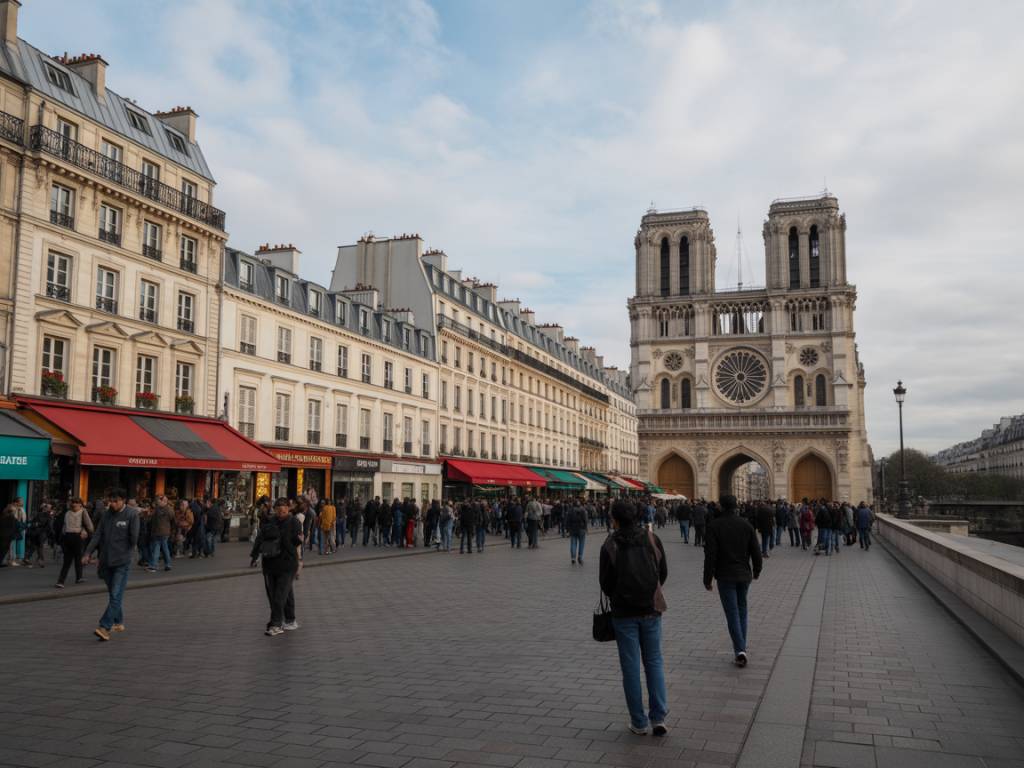
Why Explore Paris Through an Indian-Inspired Walking Tour?
Paris is best known for its grand boulevards, world-class museums and classic French cafés, yet the city also hides a fascinating network of cultural connections with India. From spiritual centres and Indian restaurants to bookshops and historic cinematic influences, Paris offers a rich backdrop for anyone interested in Indo-French heritage. An Indian-inspired walking tour of Paris reveals how migration, diplomacy, cinema, food and spirituality have shaped everyday life in the French capital.
This self-guided itinerary is designed for curious travellers who want to discover Paris beyond the obvious landmarks, while still staying in central and easily accessible neighbourhoods. It combines cultural sites, Indian eateries, spiritual hubs and literary references to help you trace Indo-French connections in a thoughtful and immersive way.
Starting Point: Gare du Nord and La Chapelle – The Heart of Little India
Many Indian-inspired walking tours of Paris naturally begin in and around Gare du Nord and the La Chapelle district, in the 10th and 18th arrondissements. This area is home to a large South Asian community, particularly from Tamil Nadu and Sri Lanka, as well as North India and Pakistan. As you exit the train station and walk towards La Chapelle, the atmosphere gradually shifts: grocery stores display sacks of basmati rice, colourful saris shimmer in shop windows and the smell of spices spills onto the pavement.
The streets around Rue du Faubourg Saint-Denis and Rue Cail are ideal for a first immersion into Indian culture in Paris. While not a historical monument in the traditional sense, this living neighbourhood is an essential stop on any Indian heritage tour of Paris because it reflects the everyday reality of the Indian diaspora.
Key things to look for in this area include:
- South Indian vegetarian restaurants serving dosa, idli and sambar at modest prices.
- Sweet shops specialising in laddoos, barfi and jalebi, especially popular during Diwali and other festivals.
- Grocery stores packed with spices, lentils, pickles and incense, useful if you are staying in a self-catered apartment.
- Textile boutiques offering saris, lehengas, salwar kameez and jewellery.
Strolling slowly through these streets offers a vivid picture of how South Asian cultures have become a visible, audible and fragrant part of contemporary Paris.
Places of Worship: Temples and Spiritual Centres
Religion plays a central role in understanding Indian heritage in Paris. While some temples and cultural associations are outside the core tourist zones, they are worth considering if you wish to immerse yourself more deeply in Indo-French spiritual life.
Within reach of Gare du Nord and La Chapelle you will find Hindu temples tucked discreetly behind modest facades, often located on upper floors or courtyards. These spaces are generally managed by community associations and are particularly active during major Hindu festivals. Visitors are usually welcome, provided they respect basic etiquette: remove shoes, dress modestly and remain discreet during rituals.
In addition to Hindu temples, Paris hosts various meditation and yoga centres influenced by Indian philosophies. While not all are directly linked to India, many draw from traditions such as Vedanta, yoga sutras or Buddhist teachings from the Indian subcontinent. Attending an open class or lecture can provide another angle on how Indian thought has influenced modern urban life in Paris.
Tasting India in Paris: Restaurants, Cafés and Street Food
Food is often the easiest and most enjoyable gateway to culture, and an Indian-themed walking tour of Paris would not be complete without tasting regional cuisines from across India. Beyond the more touristy “curry houses”, there is now a thriving and increasingly diverse Indian food scene in the city.
In and around La Chapelle and Gare du Nord, you will find numerous canteens serving simple, home-style recipes. These are frequented by locals and workers from the surrounding area, giving an authentic and budget-friendly perspective on Indian cuisine in Paris.
As you extend your walk towards the 9th and 10th arrondissements, you will encounter more contemporary Indian restaurants experimenting with fusion concepts, refined tasting menus and creative versions of street food favourites such as chaat, pani puri and kathi rolls. These establishments reflect how Indian gastronomy has adapted to Parisian tastes while still highlighting spices, regional diversity and vegetarian options.
For travellers interested in sustainable and vegetarian travel, Indian vegetarian and vegan options in Paris are particularly attractive. Many Indian kitchens in the city offer plant-based thalis, lentil curries and vegetable dishes that are both flavourful and budget-conscious.
From Screens to Streets: Indian Cinema and Parisian Imagery
Bollywood has long been fascinated by European capitals, and Paris is no exception. Indian films regularly use the city’s iconic monuments as a dramatic backdrop for song sequences and romantic scenes. While there is no single, official “Bollywood walk” in Paris, you can easily integrate cinematic references into your itinerary.
From the banks of the Seine to the steps of the Sacré-Cœur, Paris has appeared in numerous Hindi, Tamil and other regional language films. Some movies highlight postcard-perfect views of the Eiffel Tower or the Louvre, while others capture quieter moments in cobbled streets and parks. For cinema enthusiasts, researching which Indian films were shot in Paris can add another layer of meaning to familiar landmarks.
As you progress from La Chapelle towards central Paris, consider making a detour to cinemas that occasionally screen Indian films in original version, especially in the 5th and 6th arrondissements. Independent cinemas sometimes programme Indian film festivals or retrospectives that showcase both mainstream and art-house titles.
Literary and Intellectual Connections Between India and Paris
Paris has long attracted writers, artists and intellectuals from across the world, including from the Indian subcontinent. The city’s cafés, universities and publishing houses have provided a platform for debates about colonial history, independence movements and the evolution of cultural identities.
During your walk, seek out English-language and international bookshops where you can often find shelves dedicated to Indian literature, both in translation and in English. These stores usually stock works by classic authors from India as well as contemporary voices exploring migration, identity and globalisation.
You may also encounter French-language works discussing India’s political and cultural history, highlighting how the French public has perceived and interpreted the subcontinent over time. Reading these alongside Indian authors gives a nuanced view of Indo-French cultural exchange.
University districts on the Left Bank often host lectures, conferences and cultural evenings featuring Indian scholars and writers. While this may go beyond the scope of a casual walking tour, it is worth checking cultural calendars if you are staying in Paris for an extended period and wish to add a more academic perspective to your exploration.
Indian Culture in Parisian Museums and Exhibitions
Although your walking tour focuses mainly on the streets, neighbourhoods and lived spaces of Indian communities in Paris, museum visits can offer valuable historical context. Several institutions in Paris occasionally host exhibitions dedicated to Indian art, textiles, photography and contemporary design.
Large museums with global collections, such as those dedicated to Asian or non-European arts, may display sculptures, paintings and artefacts from different regions of India. These objects help trace ancient connections in trade, religion and art between India and the wider world, including Europe.
Smaller galleries and cultural centres also collaborate with Indian artists, curators and photographers to present temporary shows. These events frequently explore themes such as urbanisation, gender, memory and postcolonial identity through an Indian lens. Keeping an eye on current exhibitions can greatly enrich your Indian-inspired itinerary in Paris.
Practical Tips for an Indian-Inspired Walking Tour of Paris
Designing your own Indian heritage walk in Paris is relatively simple, especially if you stay alert to the many small signs of cultural connection scattered throughout the city. To make the most of your time, consider the following practical tips:
- Plan your route around public transport: Start near Gare du Nord or La Chapelle, then use the metro or buses to link more distant stops such as museums, cinemas or temples.
- Visit during festival periods: Diwali, Holi and Tamil New Year often bring special events, street decorations and community gatherings that give extra life and colour to the neighbourhoods.
- Respect local customs: When entering temples or cultural spaces, observe quietly, follow posted rules and ask permission before taking photos.
- Balance food stops and cultural visits: Alternate between walking, visiting cultural sites and stopping at Indian restaurants or cafés to maintain a comfortable rhythm.
- Stay curious but discreet: Remember that many of these places are living communities, not tourist attractions. Approach with respect, open questions and a genuine interest in learning.
Understanding Indo-French Cultural Exchange Through the City
Walking through Paris with India in mind changes how you perceive the urban landscape. Everyday details – the sign of a temple on a side street, the aroma of chai from a small café, a poster for an Indian film at a local cinema – all point to long-standing and evolving ties between France and the Indian subcontinent.
An Indian-inspired walking tour of Paris is not limited to “ethnic” enclaves or isolated monuments. Instead, it invites you to read the city differently, noticing how migration, trade, religion, art and food have shaped neighbourhoods over time. Whether you are of Indian origin, a frequent traveller to India or simply curious about global cultures, this type of itinerary offers a layered way to explore Paris beyond its most familiar postcard images.
By combining community hubs like La Chapelle, spiritual centres, Indian restaurants, cinema references, bookshops and occasional museum visits, you can create a rich and personalised route that suits your pace and interests. In doing so, you are not only exploring Indian culture in Paris but also observing how identities intersect and evolve in one of the world’s most visited cities.